
Modern reloading is more than just assembling components. It focuses on how to make informed decisions to build a single round (which is known as a cartridge). For typical reloaders, whether beginners, hobbyists, or experienced, the reloading process starts with studying the reliable and structured data that interprets how the powder, bullet, and cartridge work alongside each other under controlled conditions. Among all variables, powder charge and burn rate become crucial in determining cartridge performance. In short, powder charge and burn rate directly influence velocity (FPS or Feet Per Second), pressure, accuracy, consistency, and overall safety.
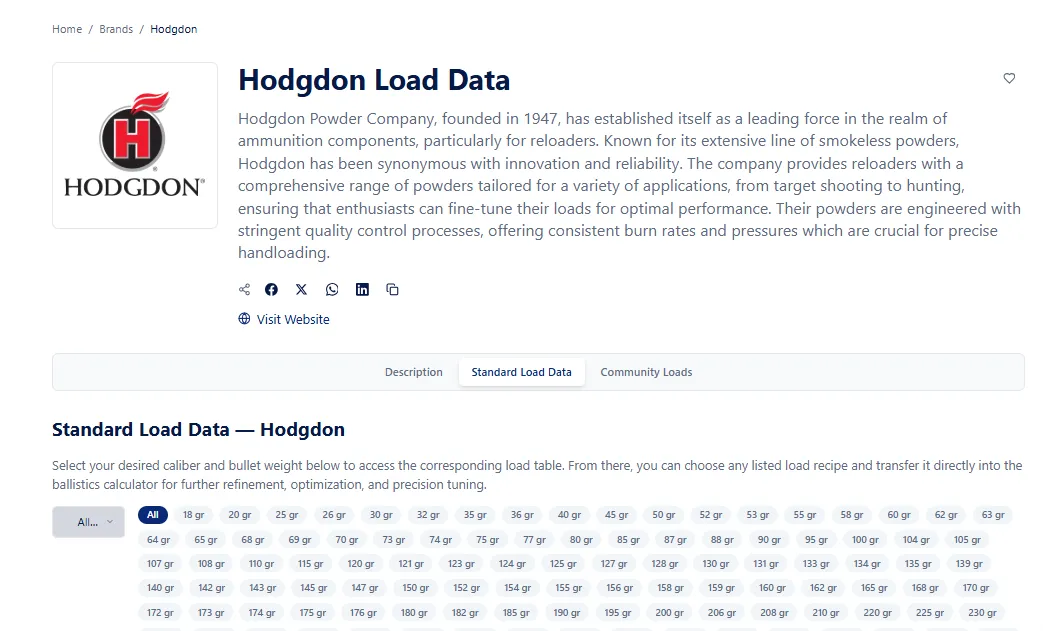
This is why reloaders rely on structured load data to manage these variables effectively and maintain performance consistency. Accessing reliable sources, such as load data for Hodgdon powders, allows reloaders to study safe charge ranges, how to control burn rate, and understand how different powders behave under controlled conditions before applying that data to build ammunition for safe reloading.

Powder Charge Is the Key to Safe Reloading – Know Why
The powder charge (the specific weight of gunpowder, measured in Grains, gr) determines the amount of energy generated in a cartridge. Even a slight change in powder charge can cause a massive shift in chamber pressure and bullet velocity. It can result in significant differences in bullet speed, firing accuracy, and consistency, and can also cause a firearm explosion.
This is why load data recipes, including load data for Hodgdon powders, always define:
-
The starting charge, which actually mentions the minimum safe powder charge level
-
The maximum charge, which defines the upper safe limit
These values are derived from testing of load recipes in a controlled environment and act as safety boundaries. Thus, it is always safe to start with the minimum safe powder charge for reloaders and increase the charge weight slowly while observing performance and pressure signs.
During load development, working with reliable and structured load data, which is available on platforms like ApexLOAD PRO, provides a dependable baseline for safe charge ranges and helps reloaders stay within safe operating limits.
Understanding Burn Rate and Its Relationship with Powder Charge
Burn rate reveals at what speed gunpowder ignites and releases energy inside the cartridge. It directly impacts the pressure inside the chamber and the velocity of the bullet.
-
Faster-Burning powders: Fast-rate burning powder is used for handguns with short barrels. It generates pressure quickly, operates within lower charge ranges, and moves the bullet fast over a short distance.
-
Slower-Burning Powders: Slow-rate gunpowder is used for rifles with long barrels. It releases energy more gradually with a sustained push and accelerates the bullet’s speed all the way to the muzzle. It requires higher charge ranges to reach a similar velocity.
Because of this, reloaders must evaluate the powder charge and burn rate together. While a small increase in a fast-burning powder can raise pressure sharply inside the chembar and cause an explosion, the same increment in a slower-burning powder may allow a broader operating range.
Studying load data for Hodgdon powders allows reloaders to understand this relationship between powder charge and burn rate, and it shows how different Hodgdon powders behave across various charge ranges and bullet weights.
How Reloaders Use Load Data in Practice
In the practical world of reloading, load data is not just used as a reference but as a decision-making tool. Reloaders compare powder options, consider charge weights, and choose combinations for designing ammunition that match their performance goals. Things reloaders consider while using load data for practice,
-
Which powder offers steady performance within a safe charge range
-
How faster and slower burn rates affect pressure and consistency during performance
-
Whether a powder charge supports the expected velocity without crossing the maximum limits
Structured load data recipes help reloaders find answers to these questions, guide them with tested parameters, and make safe and practical decisions.
Using Load Data to Compare Powders and Manage Alternatives
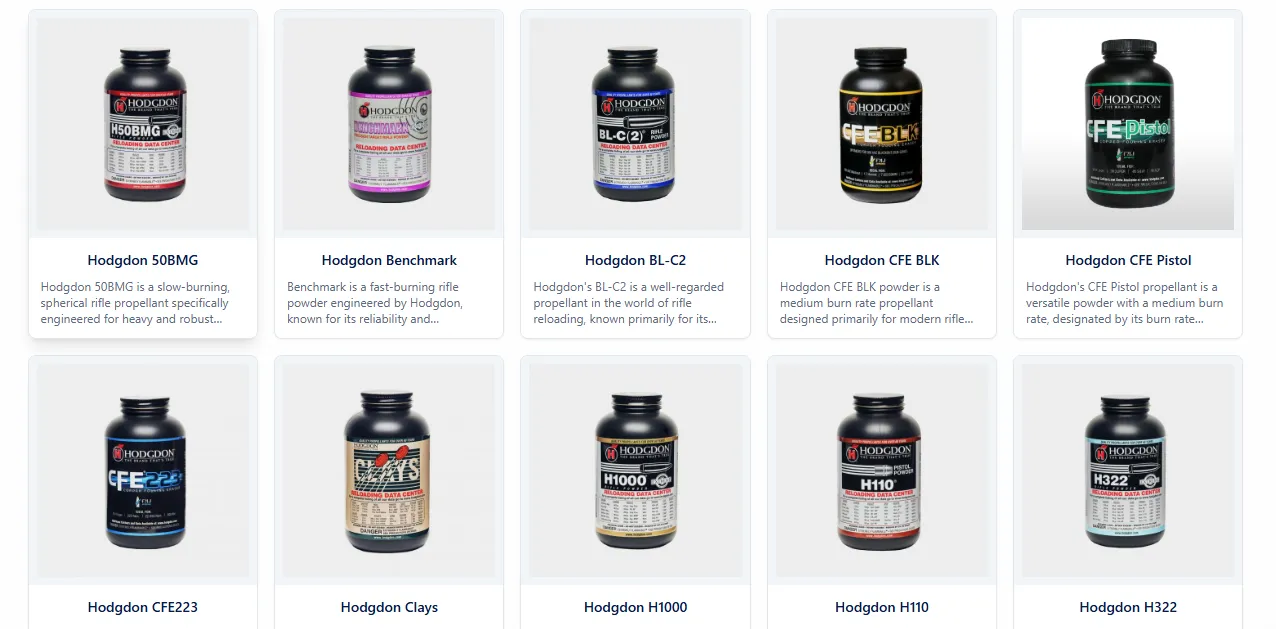
Developing ammunition following a specific load recipe requires easy availability of specific powder. However, there are situations where reloaders do not easily find the specific powder. In such scenarios, they need to compare the powder alternatives with similar burn rates without replacing the powder directly.
Comparing powder types and managing alternatives requires careful evaluation of different load data. Whether it is to access load data for Hodgdon powders or other brands, load data recipes help reloaders identify suitable alternatives while maintaining safety.
Here, studying load data from reliable sources, like ApexLOAD PRO, helps reloaders undoubtedly by organizing load data into structured formats, permitting them to compare powder charge ranges, burn rate behavior, and performance characteristics more effectively and with greater safety.
Structured Load Data Online Improves Efficiency
Modern reloading relies on a structured data baseline. It not only supports accuracy but also increases efficiency, reducing the chances of trial and error. Instead of flipping the pages of manual scripts and notebooks on load data, reloaders can streamline their workflow by comparing the powder types and choosing the best alternative with the same burn rate and charge weight through structured reloading databases online.
Wrapping Up,
No doubt, powder charge and burn rate are the core to safe and effective reloading. Together, they determine the pressure development in the chamber, bullet velocity, and consistency in a cartridge’s performance.
By studying structured load data, reloaders can better understand safe charge ranges and powder behavior. References such as load data for Hodgdon powders provide a reliable foundation for building accurate, consistent ammunition for reloaders using Hodgdon load recipes.
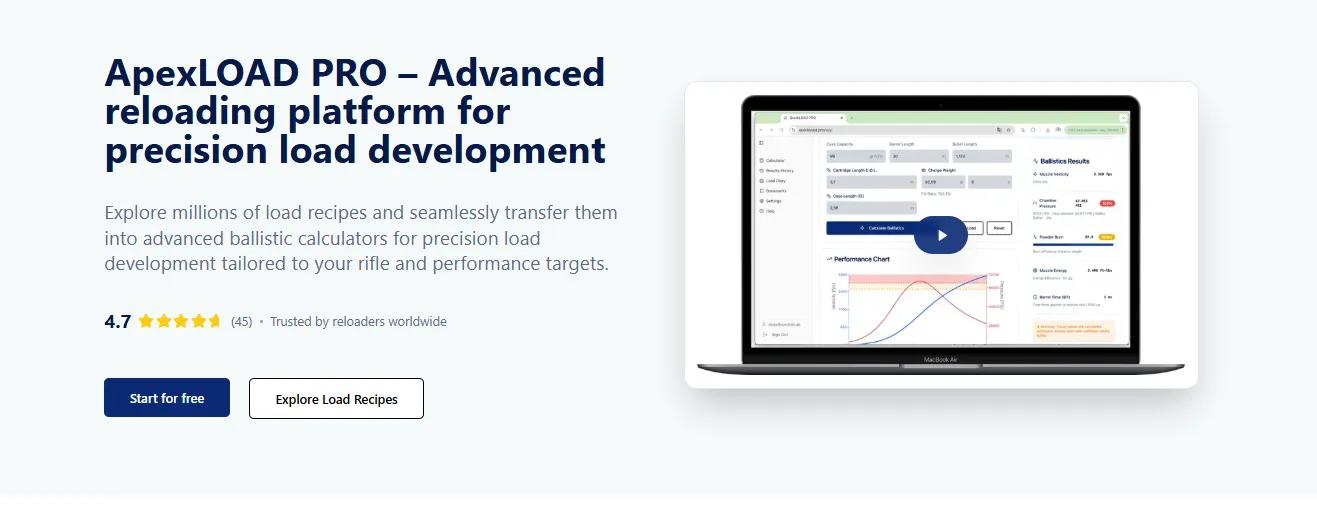
At the same time, modern platforms like ApexLOAD PRO simplify how this data is accessed, compared, and applied. By organizing load data into searchable and comparable formats, they allow reloaders to make more informed decisions, focus more on refining loads, and adapt load data for practical use with greater confidence and enhanced safety.
Finally, successful reloading depends on understanding how powder charge and burn rate work together in a load data recipe. Studying reliable load data is essential for reloaders to apply that understanding safely and effectively in goal-based ammunition development.
