

Table of Contents
-
Why a Car Care Calendar Works
-
Start With the Owner’s Manual
-
Monthly Safety Checks
-
Seasonal Maintenance Tasks
-
Service by Mileage
-
Warning Signs to Watch
-
What Drivers Can Check at Home
-
When to Visit a Repair Shop
-
How to Control Maintenance Costs
-
A Simple Maintenance Plan
-
Conclusion
Keeping a vehicle dependable in Capitol Heights means planning for daily commuting, stop-and-go traffic, summer heat, heavy rain, and winter cold snaps. A simple maintenance calendar helps drivers catch small concerns before they interrupt a trip, create a safety problem, or become a larger repair. Regular attention can also make it easier to plan service around your schedule rather than reacting to unexpected problems.
Whether you drive locally, use the Beltway regularly, or take longer trips across Maryland and the region, routine checks provide a useful starting point. When a concern needs professional attention, auto repair Capitol Heights MD, can help drivers move from guesswork to a clear diagnosis and a prioritized repair plan. Keeping a record of completed maintenance can also help you stay organized and know which services may be due next.
Why a Car Care Calendar Works
Preventive maintenance is easier to schedule than an unexpected breakdown. For example, a tire that repeatedly loses air can progress from a minor inconvenience to uneven tread wear, vibration, or a roadside problem. The same principle applies to worn wipers, aging batteries, low fluids, brake noise, and small leaks. A calendar creates regular moments to notice changes while they are still manageable.
Vehicle care should be based on both time and mileage. A low-mileage vehicle may still need attention for age-sensitive items such as tires, batteries, wiper blades, and fluids. A high-mileage commuter may reach service intervals quickly. Documenting inspections and completed work also makes it easier to understand what is due next.
Start With the Owner’s Manual
Your owner’s manual is the primary guide for the correct fluid specifications, tire pressure, warning-light information, and manufacturer service intervals. Towing, frequent short trips, extended idling, heavy traffic, extreme temperatures, and dusty conditions can all affect how a vehicle is used, so a generic schedule should never replace the vehicle-specific one.
Keep a notebook, phone note, spreadsheet, or maintenance app with the date, mileage, service performed, and receipts. For a broader month-by-month reminder list, this car maintenance checklist, organized by time and mileage, can complement the schedule in your manual.
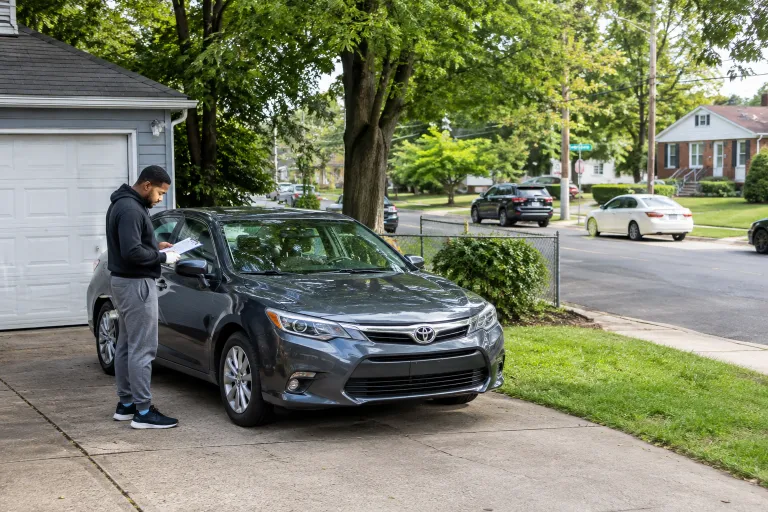
Monthly Safety Checks
Most drivers can complete a basic walk-around in a few minutes. Make it part of a monthly routine, especially before a longer drive.
-
Check tire pressure when tires are cold, using the pressure listed on the driver-side door label or in the manual.
-
Look for low tread, cracking, bulges, nails, and uneven wear.
-
Test headlights, brake lights, turn signals, reverse lights, and hazard lights.
-
Refill windshield washer fluid and inspect wipers for cracking or streaking.
-
Look beneath the vehicle for fresh fluid spots.
-
Listen for new rattles, squeaks, clicking, grinding, or vibration.
-
Check the engine oil if the vehicle has a dipstick and the manual describes the proper procedure.
Seasonal Maintenance Tasks
Spring and Summer
Before hot, humid weather arrives, check air-conditioning performance, cabin airflow, battery terminals, tire condition, and the cooling system. Overheating symptoms deserve immediate attention, particularly before highway travel or long periods in traffic.
Fall and Winter
Cooler weather is a good time to test the battery, confirm that the heater and defroster work, and replace wipers that smear the windshield. Keep a practical emergency kit with a flashlight, jumper cables, drinking water, warm layers, and basic supplies.
Service by Mileage
Exact intervals vary by make, model, engine, and driving conditions. Use these ranges as discussion points, then confirm the actual requirement in the owner’s manual.
Every 5,000 to 10,000 Miles
-
Review oil and filter service requirements.
-
Inspect tires, brakes, lights, fluid levels, and visible leaks.
-
Rotate tires when the manufacturer recommends it.
-
Report new noises or changes in ride quality.
Every 15,000 to 30,000 Miles
-
Inspect engine and cabin air filters.
-
Review brake fluid condition and brake system performance.
-
Inspect steering and suspension components.
-
Check alignment if the vehicle pulls, the steering wheel is off-center, or tires wear unevenly.
At Larger Service Milestones
Review the manual for spark plugs, coolant, transmission fluid, belts, hoses, and other scheduled items. Some services are based on both years and mileage, which matters for vehicles that are driven less often.
Warning Signs to Watch
A dashboard light is not always an emergency, but it should not be ignored. A flashing check engine light, poor braking, overheating, an oil pressure warning, or a sudden change in steering requires prompt action. Pull over safely if the vehicle is overheating, oil pressure is low, braking feels unsafe, or a warning is accompanied by smoke, strong odors, or severe drivability problems.
-
Battery warning: Have the charging system tested soon.
-
Brake warning or grinding: Promptly arrange a brake inspection.
-
New vibration: Have tires, wheels, brakes, and suspension checked.
-
Fluid smell or visible leak: Identify the source before continuing normal driving.
What Drivers Can Check at Home
Pressure checks, visible tire damage, washer fluid, lights, wipers, oil level when appropriate, and visible battery-terminal corrosion are reasonable at-home tasks. Brake repairs, airbag work, electrical diagnostics, cooling system pressure tests, transmission repairs, steering and suspension work, and high-voltage hybrid or electric vehicle service are better left to trained technicians with the right tools.
When to Visit a Repair Shop
Schedule an inspection if warning lights are on, there are leaks, braking is poor, overheating occurs, there is repeated battery trouble, steering changes occur, or unfamiliar noises occur. Even if the vehicle feels normal, a routine inspection at a planned service visit can identify wear before it becomes urgent. Ask for a written estimate that separates immediate safety work from maintenance that can reasonably be planned for later.
How to Control Maintenance Costs
-
Address tires, brakes, steering, visibility, and warning lights first.
-
Handle small leaks and unusual noises early.
-
Use the fluid grades and parts specifications required for the vehicle.
-
Keep service records for future diagnosis and resale discussions.
-
Ask which recommendations are urgent, which are preventive, and what may wait.
A Simple Maintenance Plan
-
Every month: Check tires, lights, wipers, washer fluid, and oil (when applicable) for visible leaks.
-
Each season: Review battery condition, cooling or heating performance, climate controls, and emergency supplies.
-
At routine service: Review brakes, suspension, filters, belts, hoses, and warning lights.
-
At major mileage points: Follow the owner’s manual for fluids, spark plugs, and belt replacement.
-
Whenever symptoms appear: Arrange a proper inspection rather than waiting for the next scheduled visit.
Conclusion
A consistent maintenance routine helps Capitol Heights drivers keep their vehicles safe, reliable, and ready for changing road and weather conditions. Following the owner’s manual, tracking service intervals, checking warning signs, and addressing problems early can reduce unexpected disruptions. When repairs are needed, professional diagnosis can help prioritize work and manage costs.
