
Key Takeaways
-
Small-batch baking can reduce leftovers, cleanup, and ingredient waste.
-
Accurate measurements are especially important when cutting a recipe in half.
-
Small pans, reliable timers, and a kitchen scale help produce more consistent results.
-
Portioned dough and baked goods can be frozen for future breakfasts, snacks, and desserts.
-
A simple weekly plan makes homemade baking easier to maintain.
Small-batch baking is a practical fit for Alabama households that want the comfort of homemade bread, cookies, and desserts without a counter full of leftovers. Whether the goal is a six-inch cake for a weeknight celebration or a few warm biscuits with dinner, smaller recipes make it easier to bake around work, school, errands, and changing family schedules. Southern baking can still feel generous when the yield is modest. A rotating collection of traditional Southern Thanksgiving dessert recipes can inspire smaller versions of familiar favorites, such as pecan pie bars, sweet potato muffins, fruit crisps, and spice cakes that suit two to four people.
Why Small-Batch Baking Fits Modern Alabama Homes
A full-size layer cake or four dozen cookies is useful for a reunion, church supper, or holiday table. On an ordinary Tuesday, however, a smaller bake often makes more sense. Preparing only what a household expects to enjoy soon can help prevent stale cookies, forgotten cake slices, and unused produce. Small batches also keep the process approachable. A bowl, spoon, small pan, and a short oven session may be enough for dessert. This is particularly useful when warm Alabama weather makes a long baking day less appealing, or when the kitchen is already busy with supper.
Choose the Right Recipe Size
Begin with the number of servings needed, then choose the method that creates the least guesswork. Recipes written specifically for a small yield are usually the simplest option. Halving a dependable cookie, muffin, biscuit, or quick-bread recipe can also work well.
-
Use half batches for drop cookies, muffins, cornbread, and many quick breads.
-
Choose six-inch cakes, mini loaves, or small crisps for one to four people.
-
Save full recipes for gatherings or foods that freeze well in portions.
-
Check the intended pan before changing amounts, because batter depth affects baking time.
How to Scale a Recipe Without Guesswork
-
Write down every ingredient and the original yield.
-
Choose one scaling factor, such as one-half or one-quarter.
-
Multiply every ingredient by that same factor.
-
Use a scale for flour, sugar, butter, and other solids whenever possible.
-
Record the pan, oven temperature, and final baking time for the next bake.
For repeatable results, weigh ingredients rather than rely only on volume, especially when a reduced recipe calls for small quantities. If a recipe needs half an egg, beat one egg until smooth, then measure half by weight or volume. Treat yeast, baking soda, baking powder, salt, and strong spices carefully because a small measuring error is more noticeable in a small batch.
Best Equipment for Smaller Bakes
-
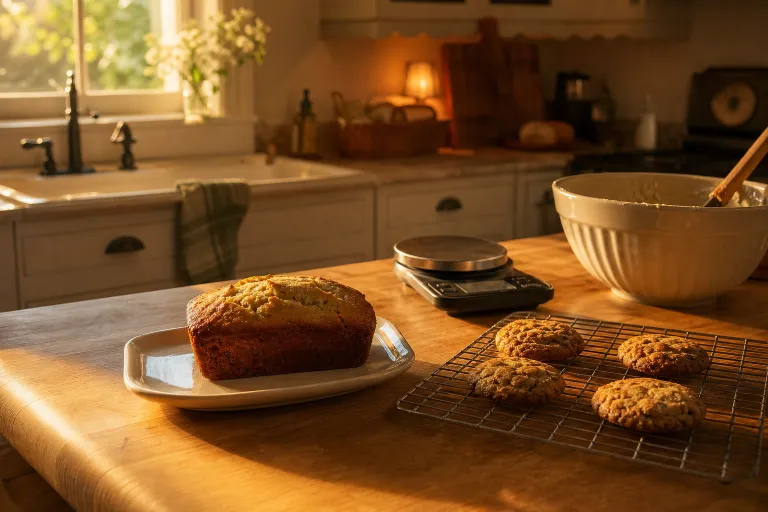
A digital kitchen scale for precise ingredient amounts.
-
A small loaf pan, a six-inch cake pan, a mini muffin tin, and a quarter-sheet pan.
-
An instant-read thermometer for breads and other baked goods where internal doneness is useful.
-
A flexible spatula and cooling rack for easier mixing and proper cooling.
Pan depth matters as much as pan width. A deeper, small loaf may need nearly as much time as a larger, shallow bake, while thin cookies and mini muffins can finish quickly. Set the timer early and use visual cues from the recipe instead of assuming every reduced batch will bake faster.
Store Ingredients and Finished Bakes Well
Keep flour tightly sealed in a cool, dry cabinet. Store nuts and whole-grain flours in the refrigerator or freezer when they will not be used promptly, and keep butter wrapped so it does not absorb refrigerator odors. Before an important bake, check that the baking powder and baking soda are still active. Label frozen dough and baked goods with the item and date. For perishable fillings, frostings, or custards, follow safe chilling guidance. Storage guidance for food and beverages can help households decide when to use refrigerated or frozen items.
Three Easy Baking Sessions for a Busy Week
Weeknight Session: Cookies
Mix a small cookie dough, scoop it into individual portions, and bake only the number needed. Freeze the remaining portions on a lined pan, then transfer them to a labeled container once firm.
Weekend Session: Quick Bread
Choose banana bread, cornbread, biscuits, or muffins for a short project. Prepare the pan first, combine the dry ingredients separately, and mix only until the batter comes together to avoid a tough texture.
Slow Morning Session: Yeast Bread
A small dough can be mixed before breakfast, left to rise while other tasks are handled, then shaped and baked later. Cooling fully before slicing helps preserve the crumb instead of compressing it.
Prevent Common Small-Batch Problems
-
Dry texture: Measure flour carefully and start checking for doneness early.
-
Flat cookies: Confirm butter temperature, flour quantity, and oven preheating.
-
Dense bread: Allow yeast dough enough time to rise in a suitable spot.
-
Soggy centers: Cool loaves, cakes, and filled desserts before cutting.
-
Uneven browning: Use the correct rack position and rotate the pan only if the recipe permits it.
Save Time, Reduce Waste, and Plan the Menu
Build a short weekly menu around shared ingredients. For example, buy bananas for a mini loaf, use the remaining butter and brown sugar for a half batch of cookies, then make a small fruit crisp with whatever is ripest. Measure dry ingredients ahead, freeze anything that will not be eaten soon, and keep a short list of recipes that the household enjoys. A flexible Alabama baking plan might include one small loaf for breakfast, six to twelve cookies for snacks, and a simple fruit dessert for the weekend. The objective is not a strict schedule. It has a manageable way to bring fresh baking into the week.
Common Questions About Small-Batch Baking
Can every recipe be halved?
Many recipes can be, particularly cookies, muffins, biscuits, and quick breads. Delicate cakes, custards, and yeast recipes may require more testing, so a recipe designed for a small yield is often preferable.
Does a smaller batch bake faster?
Often, but not always. Time depends on pan material, batter depth, oven accuracy, and the type of bake. Check early, then continue in short increments if needed.
What is best for beginners?
Drop cookies, biscuits, muffins, and quick breads are good starting points because they use straightforward mixing methods and offer clear signs of doneness.
Simple Small-Batch Baking Checklist
-
Read the recipe before starting.
-
Confirm the yield and pan size.
-
Measure carefully and preheat the oven fully.
-
Set a timer before the suggested finish time.
-
Cool baked goods before storing them.
-
Make a note of changes that improved the result.
Conclusion
Small-batch baking gives busy Alabama households a realistic and enjoyable way to prepare fresh, homemade food without spending hours in the kitchen or producing more than the family can use. Instead of committing to a large recipe, start with one dependable favorite and adjust the quantity to fit your household, schedule, and storage space. Use the right pan for the smaller batch, measure ingredients carefully, and watch baking times closely, as reduced portions may cook differently than full-size recipes. When it makes sense, freeze extra cookies, slices, muffins, or dessert portions for another day. Small-batch baking can also make it easier to experiment with seasonal ingredients and family favorites without creating unnecessary waste. Whether it is a small loaf for breakfast, a few cookies for an afternoon treat, or a simple dessert after dinner, thoughtful preparation can bring plenty of homemade Southern comfort to the table while keeping baking practical for everyday life.
