
Key Takeaways
-
Make a complete inventory before selecting a unit.
-
Measure large furniture, appliances, equipment, and unusual items.
-
Use vertical space carefully, but preserve a path for safe access.
-
Choose an extra room if you will visit the unit regularly.
-
Compare access, security, lease terms, insurance, and loading conditions along with size.
-
Ask a facility manager for guidance when you are between two sizes.
Table Of Contents
-
Why Storage Unit Size Matters
-
Make A Simple Storage Inventory
-
Common Storage Unit Sizes
-
Measure Large Items
-
Plan Your Layout Before Loading
-
Compare Features Beyond Size
-
Avoid Common Sizing Mistakes
-
Storage Unit Size Checklist
-
Conclusion
Choosing the right storage unit starts with knowing what you need to store, how often you will need it, and how long it will stay packed away. A unit that is too small can create unstable stacks and blocked access, while an oversized unit can mean paying for room you do not use. For people comparing storage units Sonoma, CA, Lakeville Mini Storage is a useful local point of reference. Based in Petaluma and serving nearby Sonoma County residents and businesses, the company outlines available personal and business storage sizes, access information, payment details, and storage features on its website. That practical, facility-level information can help renters turn a rough estimate into a more informed decision.
Why Storage Unit Size Matters
Storage is easier and safer when the space suits the load. A cramped unit can force heavy boxes onto delicate belongings, make it hard to retrieve an item, and leave furniture vulnerable to scratches or pressure damage. Conversely, a large unit may cost more each month without improving organization. Actual dimensions and ceiling heights vary between facilities, so confirm the width, length, height, and door opening before signing.
A closet-sized space may be enough for seasonal bins, clothing, and sports equipment. The contents of several rooms, however, may require a garage-sized unit with room for furniture, appliances, and a walking aisle. For a general comparison of common unit sizes and typical uses, review this storage unit size guide from This Old House.
Make A Simple Storage Inventory
Do not choose a unit based on a glance around the house. Walk through each room and write down every item that will be stored. Group belongings into categories such as furniture, appliances, boxes, tools, business supplies, clothing, and seasonal decorations. Then identify what you may need to access before the unit is emptied. For example, a one-bedroom apartment inventory might include a bed, dresser, sofa, small dining table, four chairs, television stand, several lamps, and 15 to 20 boxes. Once the list is complete, remove items that can be donated, sold, recycled, or discarded. Reducing the load before moving day can lower the unit size you need.
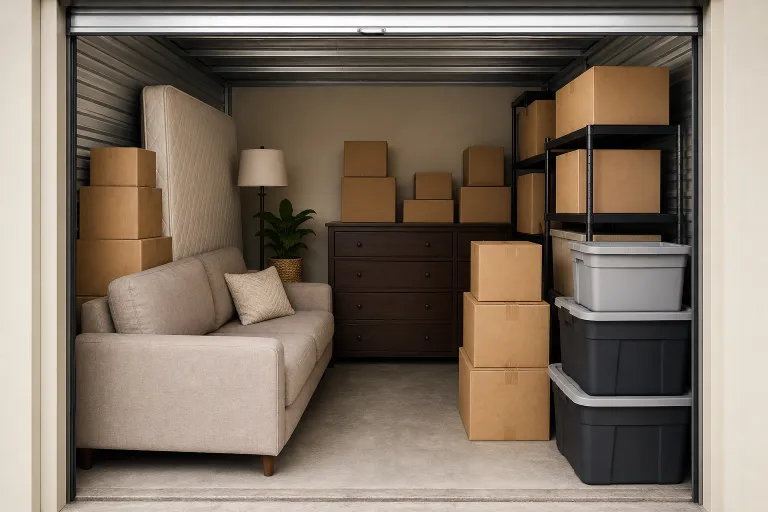
Common Storage Unit Sizes
These are general planning ranges, not guarantees. The best fit depends on the dimensions of your belongings, how efficiently they can be stacked, and whether you need regular access.
-
5×5: Often suitable for a few boxes, clothing, small furniture, decorations, or sporting gear. Think of a small closet.
-
5×10: Often works for a dorm room, small bedroom, or studio apartment contents, including a mattress and several boxes.
-
10×10: A practical starting point for furniture, appliances, and boxes from a small apartment or home.
-
10×15: Useful for several rooms of furniture, large appliances, or a renovation project.
-
10×20: May fit multi-room household contents, larger equipment, or business inventory. Vehicle storage depends on facility rules.
-
10×30: Best suited to substantial household contents, bulky equipment, or inventory that also needs workable access space.
Measure Furniture And Large Items
Measure the length, width, and height of the largest items first. This includes sofas, mattresses, cabinets, refrigerators, washers, dryers, desks, shelving, exercise machines, motorcycles, and oversized artwork. Two similar-looking items can have very different footprints. A sectional sofa or king mattress can quickly change the size estimate. Also, determine what can be safely disassembled. Bed frames, table legs, and shelving may pack more efficiently when taken apart and protected. Keep hardware in labeled bags, and check that hallways, elevators, doors, and the unit entrance can accommodate each large piece.
Plan Your Layout Before Loading
Load the unit as if it were a small room, not a deep box. Put heavy, sturdy items on the bottom and lighter boxes on top. Use protective coverings where appropriate, keep fragile belongings away from pressure points, and label boxes on at least two sides.
Leave An Access Aisle
Create a narrow path from the entrance to the back wall before loading. Place frequently needed items near the front, such as holiday decorations, work files, or seasonal clothing. Keeping a simple phone note or sketch of the unit layout can save time later.
Compare Features Beyond Size
The lowest monthly rate is not always the best value. Before renting, compare access hours, holiday closures, lighting, gate controls, on-site management, drive-up loading options, climate-control availability, payment fees, notice requirements, and month-to-month lease terms. Review insurance expectations and prohibited-item rules, especially for vehicles, business inventory, flammables, perishables, and hazardous materials.
Avoid Common Sizing Mistakes
-
Guessing instead of making an inventory.
-
Ignoring ceiling height and vertical stacking options.
-
Forgetting to measure unusually shaped or oversized items.
-
Filling every inch of floor space and leaving no aisle.
-
Using weak boxes for heavy belongings.
-
Selecting a unit based only on the advertised rate.
-
Skipping a review of insurance coverage and facility restrictions.
Storage Unit Size Checklist
-
Inventory completed and unnecessary items removed.
-
Large furniture and equipment measured.
-
Boxes counted and labeled.
-
Frequently accessed items identified.
-
Unit dimensions, height, and door clearance confirmed.
-
Loading method and access aisle planned.
-
Access hours, insurance rules, and prohibited items reviewed.
-
Total monthly cost compared with the actual storage need.
Final Thoughts
The right storage unit is not simply the smallest space that holds your belongings. It is a space that protects them, lets you reach what you need, and fits both your budget and daily routine. Start by creating a detailed inventory, carefully measuring large items, and choosing a unit size that allows for safe walkways and easy access. Consider features such as security, climate control, operating hours, and flexible rental terms before making a decision. Packing items in labeled boxes and placing frequently used belongings near the front can also save time and effort later. With thoughtful planning and a little preparation, your storage experience can stay organized, efficient, and far less stressful throughout 2026 while helping keep your belongings safe and accessible whenever you need them.
